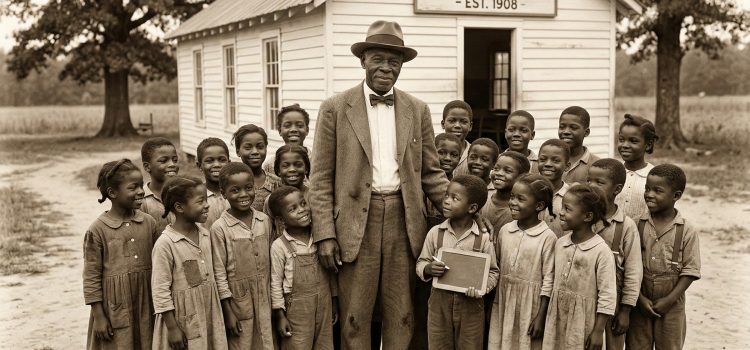

Julius Erastus Neely: Champion of Education in China Grove
Just outside Salisbury, in China Grove, Julius Erastus Neely, the son of an enslaved person, dedicated his life to empowering his community through education. A man of many talents – an educator, minister, and carpenter – Neely profoundly understood the transformative power of learning.
He believed in lifting as he climbed, ensuring that the next generation had the tools to thrive.
Around 1910, driven by this conviction, he founded the Neely School. This single-room schoolhouse, built through the collective efforts of Neely, his family, and friends, served as a beacon of knowledge for African American children who were largely denied adequate public education. Before school integration in 1948, the Neely School educated approximately 1,300 students, leaving an indelible mark on generations and underscoring the community’s fierce determination to provide for its own.
Neely’s story is not just about a school; it’s a powerful narrative of self-reliance and community building. In an era of profound racial inequality, he provided a critical pathway for intellectual growth and empowerment, ensuring that children had access to education that was systematically denied to them by the state. His legacy is a testament to the enduring strength and ingenuity of Black communities in carving out spaces for progress and opportunity.
His influence resonates deeply within the history of China Grove and Salisbury, reminding us of the dedicated individuals who shaped the lives of countless students, instilled in them a love for learning, and equipped them with the skills to navigate a challenging world. Julius Erastus Neely was truly a champion of education, and his work continues to inspire.