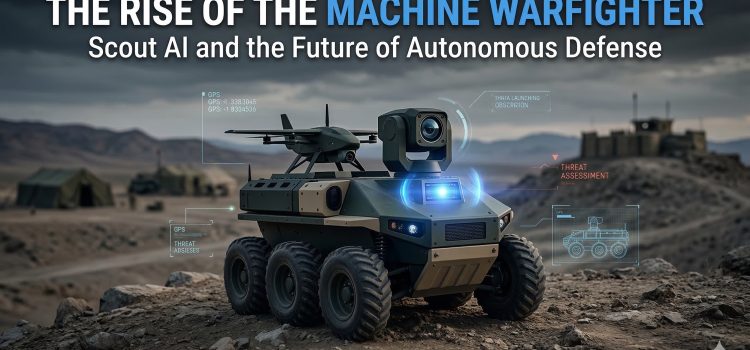
The battlefield is changing. As technology advances, so does the nature of warfare, and at the forefront of this evolution is artificial intelligence. The concept of the ‘machine warfighter’ is no longer science fiction but a rapidly developing reality, with companies like Scout AI leading the charge. But what does a future where AI controls autonomous defense systems truly look like, and what are the profound implications we must consider?
Scout AI: Pioneers of Autonomous Warfare
Scout AI is not just developing AI; they are building ‘warfighters’ – intelligent agents designed to control self-driving vehicles and lethal drones, capable of seeking and destroying targets in the physical world. Their CEO, Colby Adcock, envisions a future where large AI models, traditionally confined to generalized chatbots and assistants, transition into highly specialized military assets.
A recent demonstration highlighted their capabilities: an AI agent successfully located and destroyed a target truck. What sets Scout AI apart is its emphasis on ‘Replan at the Edge’ autonomy. Unlike legacy systems that execute pre-programmed actions, Scout AI’s agents can adapt and replan in real-time based on new information and evolving commander intent.
The Double-Edged Sword: Concerns and Ethical Dilemmas
While the technological advancements are undeniable, the rise of such autonomous systems raises significant concerns:
- Unpredictability: Large Language Models (LLMs) and complex AI agents are inherently unpredictable. Even in benign applications, they can misbehave or produce unexpected outcomes. In a military context, this unpredictability carries potentially catastrophic risks.
- Cybersecurity: Ensuring military-grade reliability and cybersecurity for these advanced AI systems is an immense challenge. A compromised autonomous ‘warfighter’ could have devastating consequences.
- Ethical Implications: Perhaps the most profound concern is the ethical dilemma. If AI is given the authority to make lethal decisions, how does it navigate complex rules of engagement? Who is a combatant and who is not? The responsibility and accountability in such scenarios become incredibly complex.
Scout AI maintains that its technology adheres to US military rules of engagement and international norms, including the Geneva Convention. However, the inherent ‘black box’ nature of advanced AI makes independent verification and trust building a continuous challenge.
Deployment and the Future of Defense
With four contracts already held with the Department of Defense, Scout AI is clearly on the military’s radar. While their technology is advanced, full deployment is still estimated to be a year or more away. This period offers a crucial window for robust debate, ethical framework development, and rigorous testing.
The integration of AI agents into defense systems represents a paradigm shift. It promises efficiency and precision, but it also introduces unprecedented ethical, safety, and accountability challenges. As we move closer to a future defined by autonomous warfare, the imperative to understand, control, and responsibly deploy these powerful technologies becomes paramount.